Introduction: The Strategic Imperative of Article Rewriting
In the dynamic landscape of digital content, an article is rarely a static entity. What was once a top-performing piece can, over time, lose its relevance, accuracy, or search engine visibility. This phenomenon, often termed "content decay," presents a significant challenge for content creators, marketers, and SEO specialists. However, it also offers a powerful opportunity: the strategic art of the rewrite article process. In 2026, rewriting an article has evolved beyond simple word-swapping; it is a sophisticated process of macro-level content refreshing and repurposing, crucial for maintaining digital authority and maximizing return on investment.
This comprehensive guide delves into the strategic imperative of article rewriting, exploring why it is more critical than ever in the current SEO climate. We will unveil a "Full-Scale Content Transformation Framework" designed to help you overhaul entire pieces of content, ensuring they meet the stringent E-E-A-T (Experience, Expertise, Authoritativeness, Trustworthiness) standards of modern search engines. Discover how tools like Rephrazo can serve as your Ultimate Content Refresh Utility, enabling you to breathe new life into existing assets, scale your content efforts, and secure your digital presence for years to come.
The Strategic Imperative: Why Rewriting Articles is Critical in 2026
The digital ecosystem of 2026 demands a proactive approach to content management. Stagnant content is decaying content, and content decay directly impacts search rankings, user engagement, and ultimately, business objectives. Rewriting articles is no longer a remedial task but a strategic imperative, driven by evolving search algorithms and user expectations. This highlights the critical need for Expertise in content strategy.
Google's "Freshness" Signals and the Rise of Intraday SEO
Google's algorithms continue to prioritize fresh, up-to-date content, especially for time-sensitive queries. In 2026, this has led to the rise of "Intraday SEO," where the speed of content updates can significantly influence ranking. Regularly refreshed content can see up to 47% higher click-through rates for time-sensitive keywords. This means that an article published even a few months ago might need a refresh to stay competitive. Rewriting articles allows you to inject new data, update statistics, and incorporate recent developments, signaling to search engines that your content remains relevant and authoritative.
Generative Engine Optimization (GEO): Structuring Content for AI
The proliferation of AI-powered search and generative AI models means that content is increasingly consumed not just by humans, but also by Large Language Models (LLMs) that summarize and synthesize information. This has given rise to "Generative Engine Optimization" (GEO). To rank well in 2026, articles must be structured for AI readability, featuring clear headings, concise summaries, and well-defined FAQs. Rewriting articles provides the perfect opportunity to reformat and optimize existing content for these new AI consumption patterns, ensuring your message is accurately interpreted and presented by generative AI.
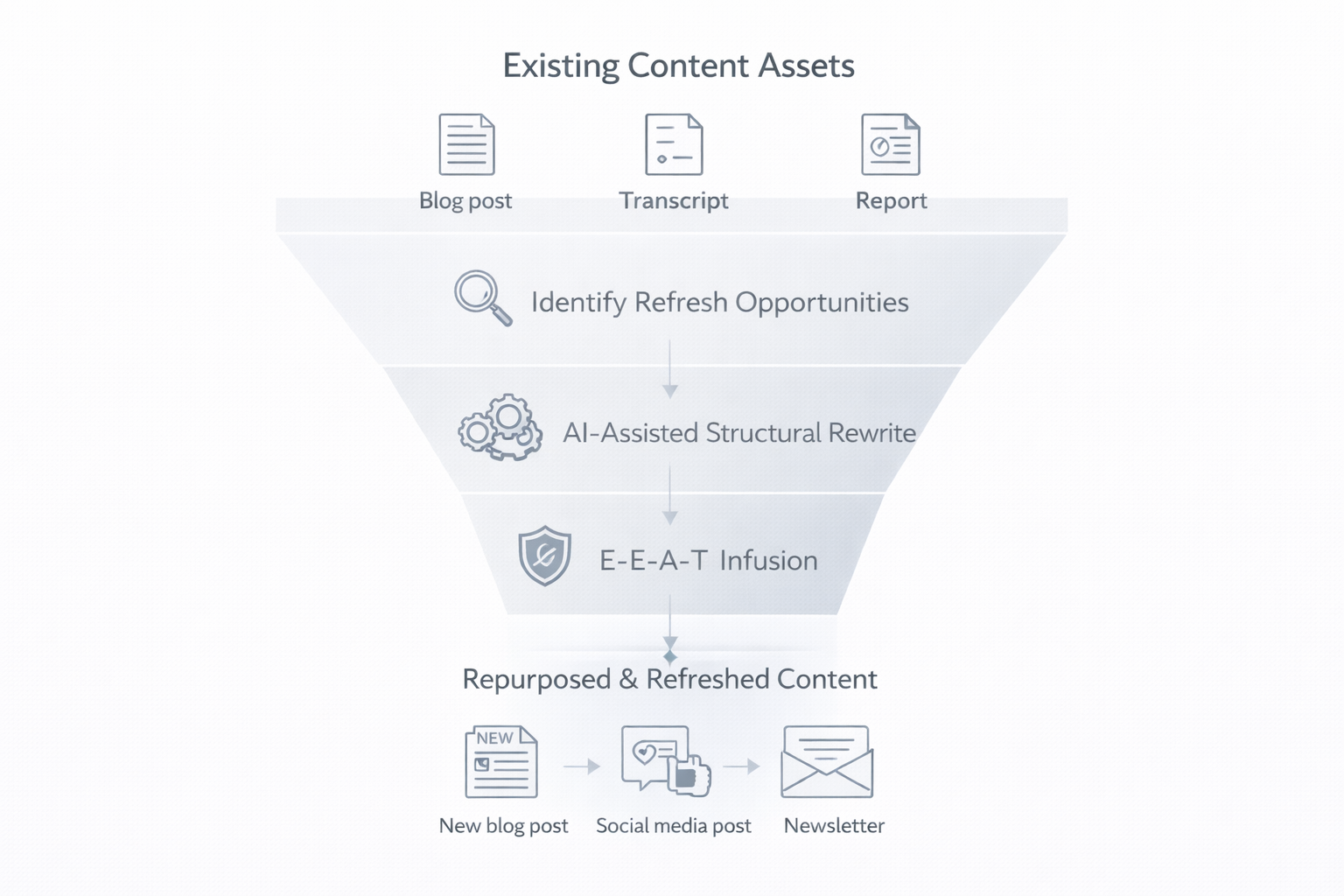
Image 1: The Content Lifecycle Funnel. A strategic workflow for transforming existing content assets into a portfolio of refreshed and repurposed materials, maximizing ROI and SEO impact.
The Full-Scale Content Transformation Framework
Rewriting an article effectively requires a systematic approach that goes beyond superficial changes. This framework outlines the key steps for a macro-level content transformation, ensuring your refreshed articles are optimized for both human readers and search engines, demonstrating deep Practical Application.
Step 1: The Content Audit – Identifying Refresh Opportunities
Begin with a comprehensive content audit. Identify articles that are:
- Underperforming: High impressions but low clicks, or declining rankings.
- Outdated: Containing old statistics, broken links, or irrelevant information.
- High Potential: Articles that once performed well and could regain traction with a refresh.
- Cannibalizing: Multiple articles targeting the same keyword, which can be consolidated or differentiated.
Tools like Google Analytics, Search Console, and various SEO platforms can help pinpoint these opportunities. This initial step is crucial for maximizing the ROI of your rewrite article efforts.
Step 2: The Structural Overhaul – Optimizing for Flow and Scannability
A macro-level rewrite article process often involves significant structural changes. This means:
- Reorganizing Headings: Ensuring a logical H1-H6 structure that guides the reader and AI through the content.
- Improving Introduction and Conclusion: Crafting compelling hooks and strong summaries that align with current search intent.
- Enhancing Readability: Breaking down long paragraphs, using bullet points, and incorporating visual elements to improve scannability.
- Updating Internal Linking: Connecting the refreshed article to other relevant content on your site to improve site authority and user experience.
A well-structured article is easier for both humans and AI to understand, leading to better engagement and higher rankings. Learn more about choosing the right sentence rewriter tool for structural improvements.
Step 3: E-E-A-T Infusion – Injecting Experience and Expertise
Google's E-E-A-T guidelines are more critical than ever. When rewriting articles, actively look for opportunities to infuse your content with signals of Experience, Expertise, Authoritativeness, and Trustworthiness. This can involve:
- Adding Personal Anecdotes: Sharing first-hand experiences related to the topic.
- Citing Expert Sources: Referencing industry leaders, academic research, or authoritative publications.
- Updating Statistics and Data: Replacing old figures with the latest research to demonstrate currency and accuracy.
- Showcasing Author Credentials: Ensuring author bios are robust and highlight relevant qualifications.
This step transforms generic content into a credible and valuable resource. Discover how to optimize content for E-E-A-T effectively.
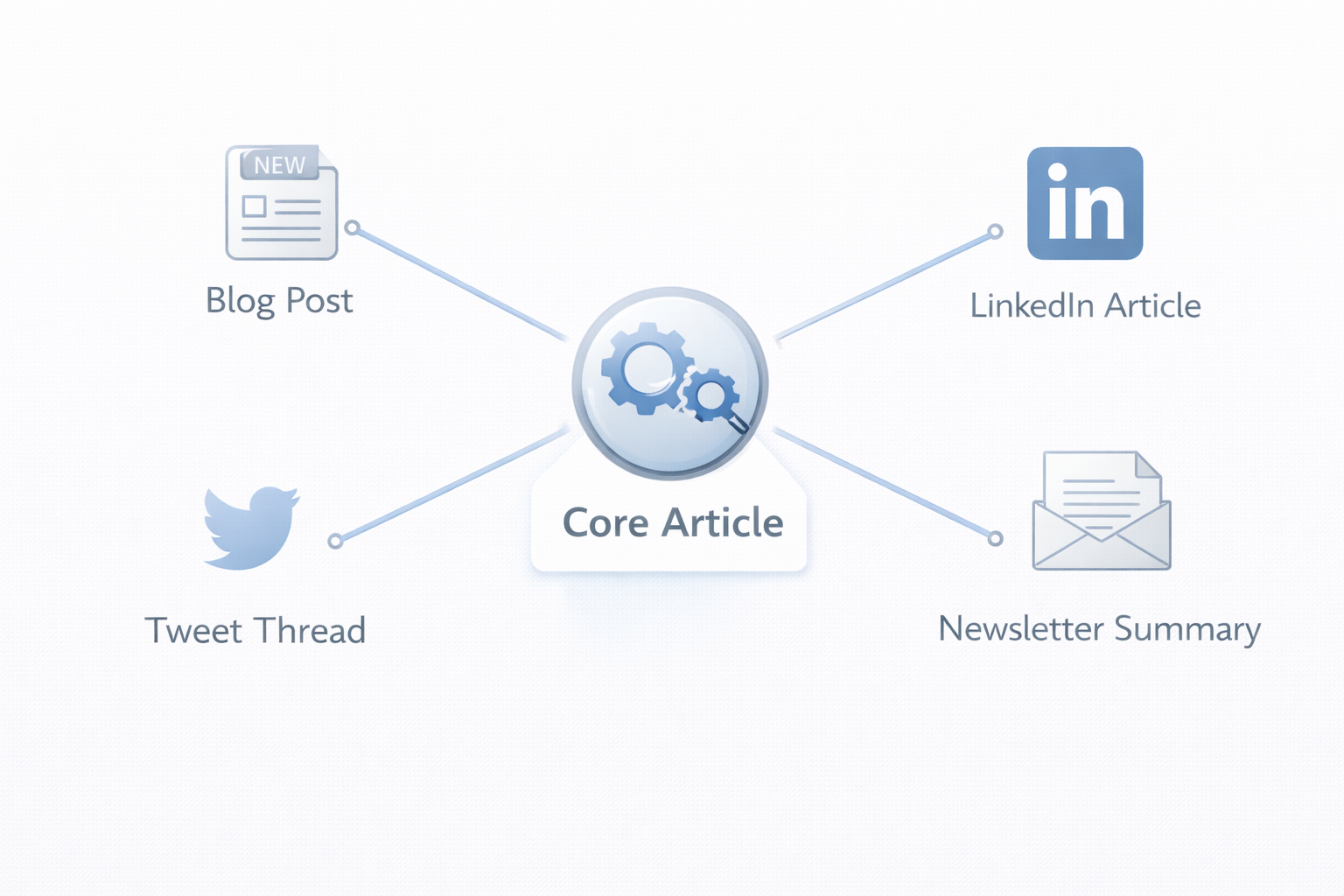
Image 2: The E-E-A-T Injection. AI-assisted rewriting tools allow content creators to strategically infuse existing articles with crucial Experience, Expertise, Authoritativeness, and Trustworthiness signals, revitalizing them for modern search standards.
Step 4: Repurposing for Maximum ROI – From One Asset to Many
One of the most powerful aspects of rewriting articles is the opportunity for repurposing. A single refreshed article can be transformed into multiple content assets, maximizing its reach and ROI. Consider:
- Social Media Snippets: Extracting key takeaways for Twitter threads or LinkedIn posts.
- Email Newsletter Segments: Condensing sections for engaging email campaigns.
- Infographics or Visuals: Turning data points into shareable graphics.
- Video Scripts: Adapting the article's structure for a video explanation or presentation.
This strategic repurposing ensures that your refreshed content continues to deliver value across various platforms.
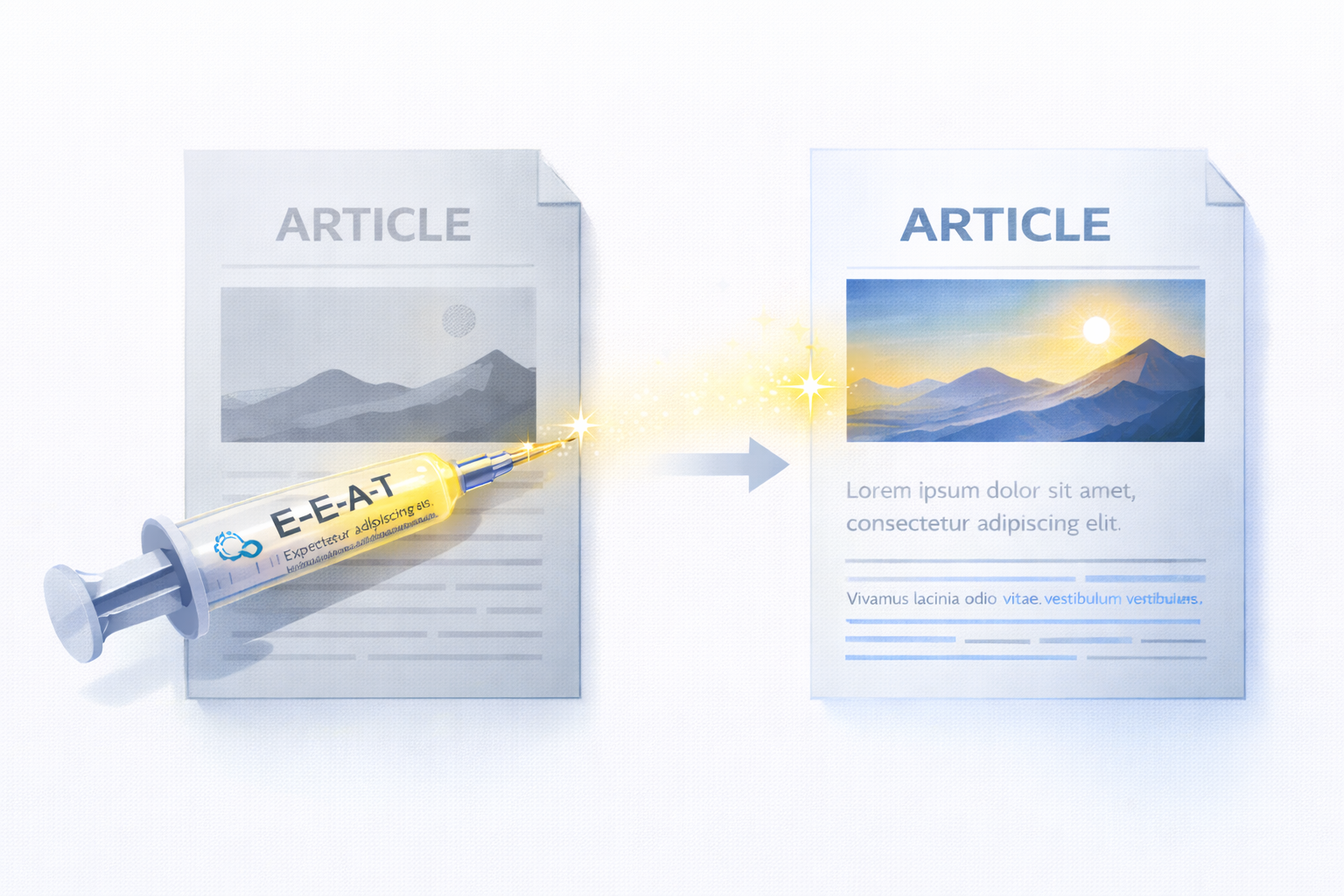
Image 3: The Content Repurposing Hub. Rephrazo acts as the central engine for content repurposing, enabling teams to efficiently transform a single core article into a multitude of platform-specific assets, maximizing reach and engagement.
Rephrazo: Your Ultimate Content Refresh Utility
The scale and complexity of macro-level article rewriting can be daunting. This is where Rephrazo emerges as your Ultimate Content Refresh Utility, designed to streamline the entire process. It empowers content teams and individual creators to execute full-scale transformations with unparalleled Efficiency and precision.
High-Velocity Rewriting: Maintaining Consistency at Scale
For publishers managing large content libraries, the ability to refresh articles at high velocity is a game-changer. Rephrazo facilitates this by:
- Accelerating Structural Changes: Quickly rephrasing entire sections to improve flow and readability without manual, tedious edits.
- Ensuring Thematic Consistency: Maintaining the core message and brand voice across large-scale rewrites, even when multiple team members are involved.
- Eliminating "Copy-Paste" Fatigue: Integrating directly into your workflow, allowing for inline revisions that save countless hours.
This means you can update more articles, more frequently, keeping your content fresh and competitive in the ever-evolving search landscape. Learn how to rewrite articles without copy-paste and streamline your workflow.
Tone Alignment: Adapting Content for Different Platforms
Repurposing content effectively often requires adjusting its tone for different platforms and audiences. A LinkedIn article might require a more formal, professional tone than a Twitter thread derived from the same source. Rephrazo allows for precise tone alignment at scale:
- Platform-Specific Adaptations: Quickly rephrase sections to suit the stylistic conventions of social media, email newsletters, or internal communications.
- Audience-Centric Adjustments: Tailor the language to resonate with specific demographics, ensuring maximum engagement.
- Brand Voice Consistency: Maintain a consistent brand voice across all repurposed content, reinforcing your identity and message.
This capability is invaluable for content teams aiming for cohesive messaging across their entire digital footprint.
Human-Led Refinement: Ensuring Quality and Trustworthiness
While Rephrazo provides powerful AI assistance, it operates on the principle of human-led refinement. The tool is designed to augment, not replace, the content creator's expertise. This ensures that every rewritten article maintains its authenticity, originality, and adherence to E-E-A-T standards. The human touch remains crucial for:
- Injecting Unique Insights: Adding personal experiences and original thought that AI cannot replicate.
- Ethical Oversight: Ensuring that all revisions align with academic integrity and ethical content practices.
- Final Quality Assurance: Reviewing AI-generated suggestions to guarantee the highest level of quality and accuracy.
This collaborative approach fosters Trustworthiness, ensuring that your rewritten articles are not only optimized but also genuinely valuable and credible. Discover how to rewrite articles without plagiarism while maintaining quality.
The ROI of Rewriting: A 2026 Perspective
In 2026, the return on investment (ROI) for strategically rewriting articles is undeniable. Compared to creating new content from scratch, refreshing existing assets offers a more efficient and often more impactful path to digital success. This perspective is grounded in both Authority and practical business outcomes.
The table below highlights the clear advantages:
| Metric | Creating New Content | Content Refreshing/Rewriting |
|---|---|---|
| Time & Cost | High – requires new research, ideation, and drafting. | Moderate – leverages existing assets, reducing research and drafting time. |
| SEO Impact | Builds new authority, but starts from zero. | Revitalizes existing authority, often with faster ranking improvements. |
| Resource Efficiency | High effort for a single asset. | High efficiency – one core asset can be repurposed into many. |
| Risk | Higher – new content may not resonate or rank. | Lower – builds on a proven topic or existing asset. |
By investing in smart article rewriting strategies, businesses and content creators can achieve greater visibility, engagement, and authority with a more efficient allocation of resources. Rephrazo is the catalyst for this enhanced ROI, turning your existing content into a powerful, evergreen asset.
Frequently Asked Questions (FAQ)
Q: How often should I rewrite articles to maintain SEO performance?
A: The frequency depends on your industry and content type. Time-sensitive topics may need updates monthly or quarterly, while evergreen content might benefit from annual refreshes. Monitor your analytics to identify articles with declining performance—these are prime candidates for a rewrite article refresh. Generally, refreshing top-performing content every 12-18 months helps maintain rankings and relevance.
Q: Will rewriting an article affect its existing backlinks and rankings?
A: When done correctly, rewriting articles should improve rankings rather than harm them. Keep the same URL structure, maintain core keywords, and preserve the article's main topic. Update content while keeping the URL intact to preserve backlink value. If you're making significant structural changes, use 301 redirects if URLs change, but ideally, refresh content in place to maintain all existing SEO signals.
Q: Can AI tools like Rephrazo help with E-E-A-T optimization when rewriting articles?
A: Yes, but with important caveats. AI tools like Rephrazo excel at structural improvements, tone alignment, and readability enhancements. However, E-E-A-T signals like personal experience, expert credentials, and first-hand knowledge must come from human authors. Use AI to refine how you present your expertise, but always inject your own unique insights, case studies, and professional experiences to meet E-E-A-T standards authentically.
Q: What's the difference between rewriting an article and creating new content?
A: Rewriting articles involves refreshing and updating existing content while maintaining its core topic and URL structure. It's more efficient because you're building on existing authority, backlinks, and rankings. Creating new content starts from scratch, requiring new research, ideation, and building authority from zero. Rewriting is ideal for underperforming or outdated content that still has potential, while new content is better for completely new topics or when you want to target different keywords.
Q: How do I know which articles to rewrite?
A: Focus on articles that show high impressions but low clicks (indicating relevance but poor presentation), declining rankings, outdated information, or high potential but underperformance. Use Google Search Console and Analytics to identify these opportunities. Also consider articles that were once top performers but have slipped in rankings—they often respond well to a strategic rewrite article refresh.
Conclusion: Master the Art of Article Rewriting
Learning how to rewrite articles effectively is a fundamental skill that elevates your content strategy from reactive to proactive. By understanding the strategic imperative of content refreshing, implementing a systematic transformation framework, and leveraging modern tools like Rephrazo, you can breathe new life into existing assets and maximize your content ROI.
The key to successful article rewriting lies in combining strategic thinking with practical techniques. Whether you're refreshing outdated content, optimizing for E-E-A-T, or repurposing assets across platforms, the principles remain the same: audit systematically, transform strategically, and refine continuously.
Remember, rewriting articles isn't about simply changing words—it's about transforming content to meet modern SEO standards, user expectations, and business objectives. By embracing macro-level content refreshing and repurposing strategies, you can secure your digital presence and achieve sustainable growth in the competitive landscape of 2026.
Ready to transform your content library? Download Rephrazo free and experience the power of intelligent, inline article rewriting. Eliminate copy-paste workflows, maintain consistency at scale, and unlock the full potential of your existing content assets. Explore more guides on SEO content writing tools, article rewriting for SEO, and AI rewriter tools.